Mix-and-match bundles
Customers can build the pack size that fits their order and repeat flavours when needed.
Case study 02 · Retail eCommerce · United States
A Shopify storefront built to sell products, bundles and bookable experiences.
I designed and refined a Shopify experience connecting retail storytelling with bundles, bulk pricing, subscriptions, delivery rules and bookings.
Visit live store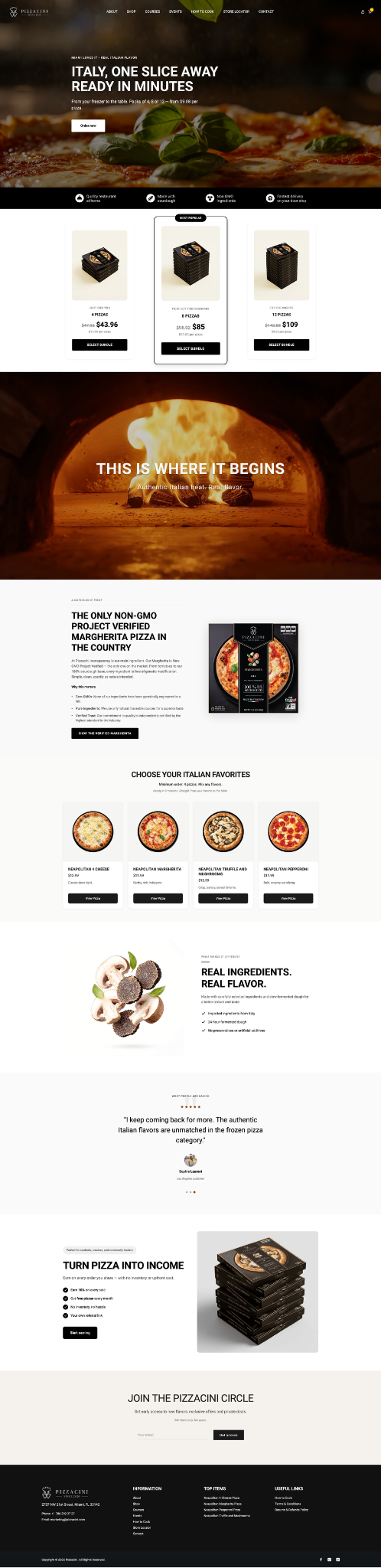
Overview
Pizzacini sells frozen Neapolitan pizzas alongside bundles, subscriptions, bulk orders, classes and a live oven experience. Each offer brought different limits and fulfilment rules into one storefront.
I organised the purchase paths, customised the Shopify theme, configured specialist apps and closed interaction gaps between them.
Evidence of delivery
Configurable mix-and-match bundle sizes
Bulk-order threshold with progress feedback
Local-delivery validation around the Miami store
Core commerce and booking apps integrated
Selected experience
Pizzacini needed one coherent experience for retail products, configurable packs, high-volume orders and scheduled experiences. The work below shows how brand, conversion logic and real fulfilment needs came together in Shopify.
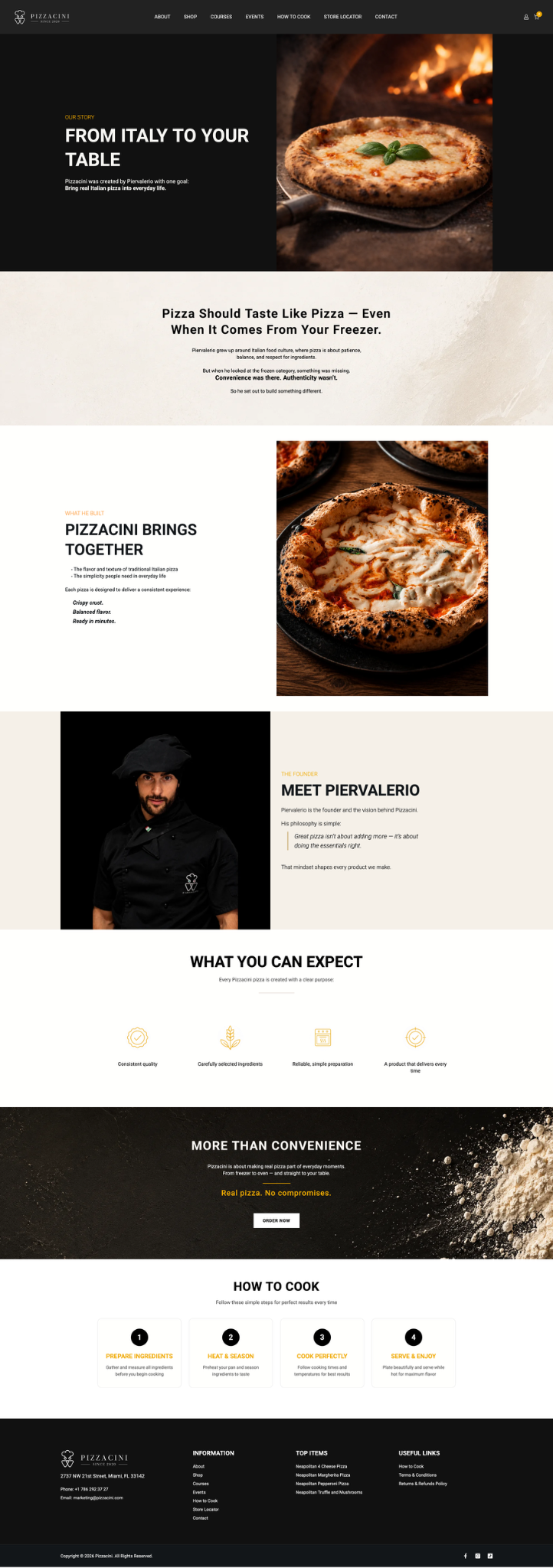
01 · Storefront & brand journey
I shaped the Shopify theme into a responsive storefront that introduces the product, explains what makes it different and moves customers toward bundles, individual pizzas and repeat-purchase options without losing the premium food story.
02 · Conversion mechanics
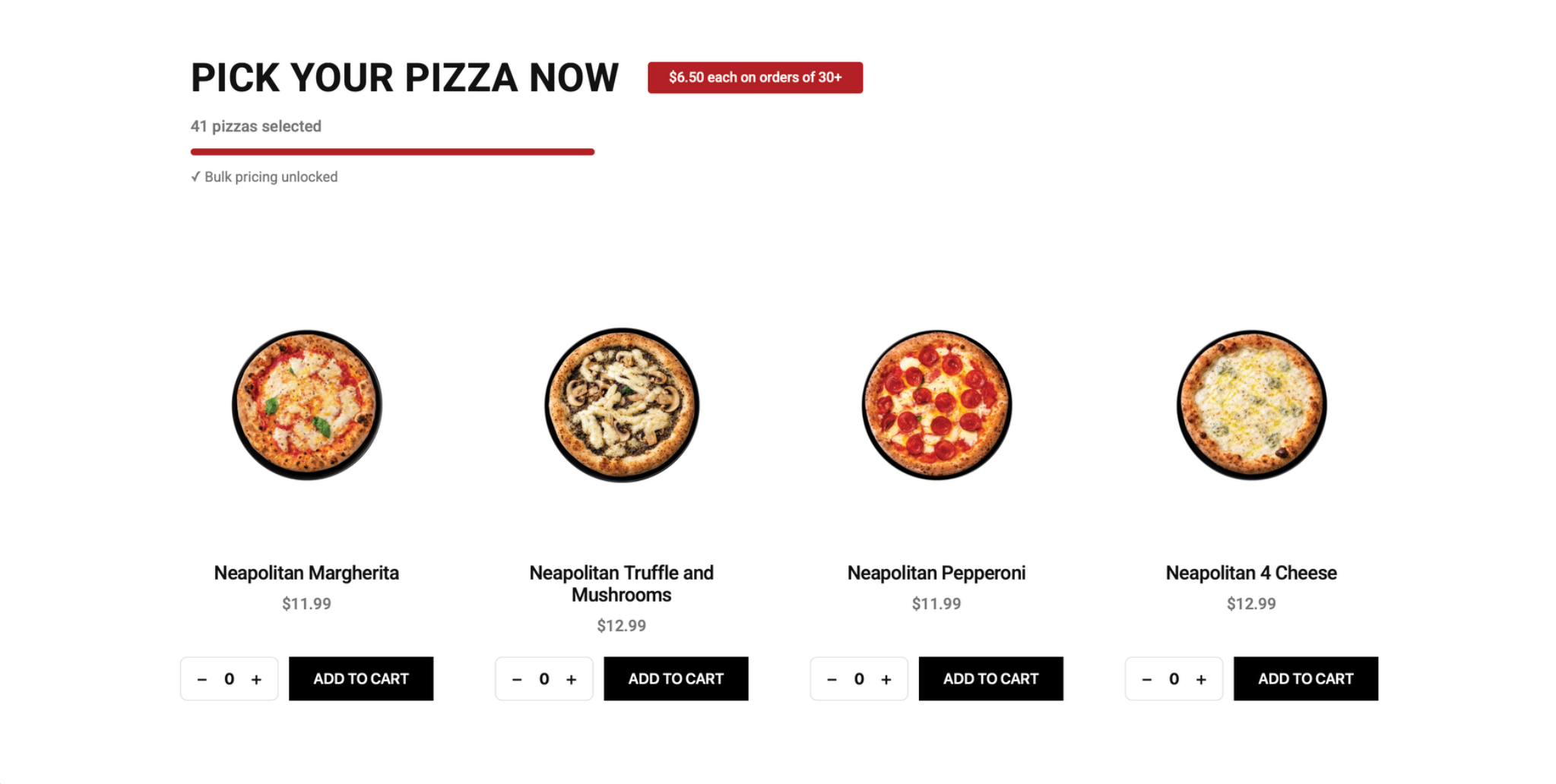
The store uses clear feedback, focused controls and specialist app integrations to help customers understand quantities, pricing and availability before they reach checkout.
Customers can build the pack size that fits their order and repeat flavours when needed.
Quantity progress and unlocked pricing make the volume incentive visible before checkout.
Eligibility and fulfilment rules help customers choose a valid delivery or pickup path.
Repeat-purchase options extend the store beyond one-time product orders.
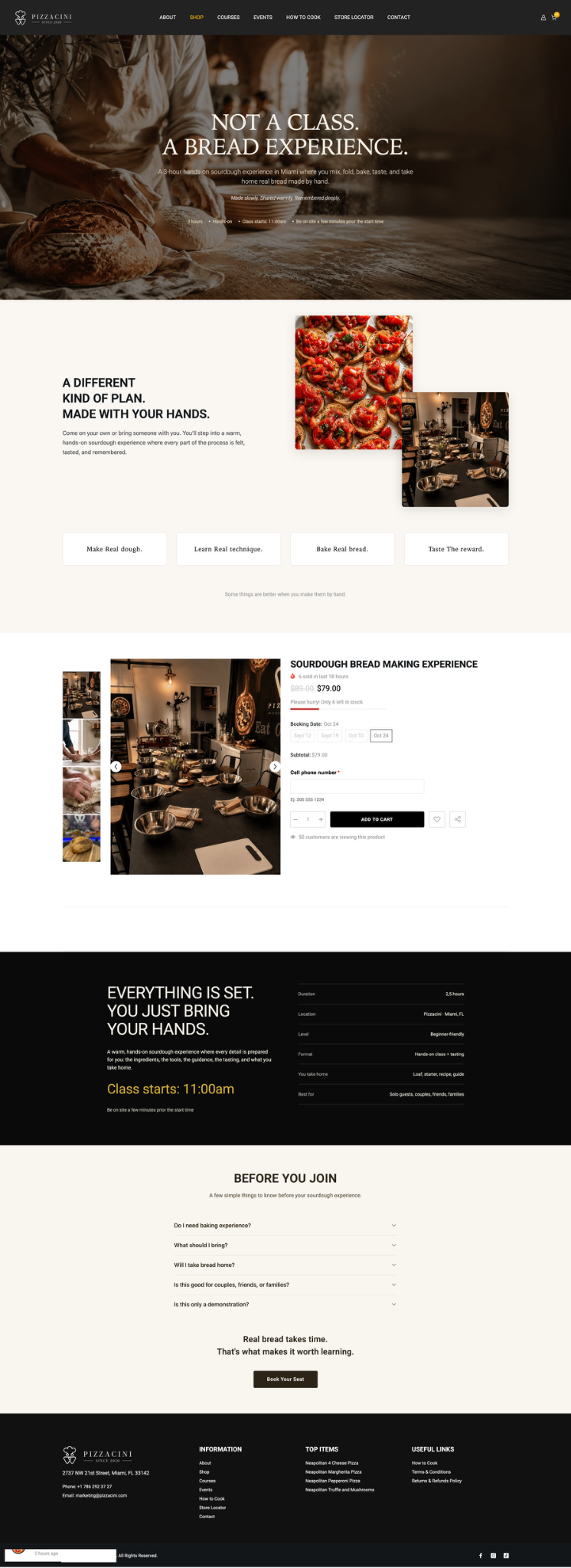
03 · Commerce beyond products
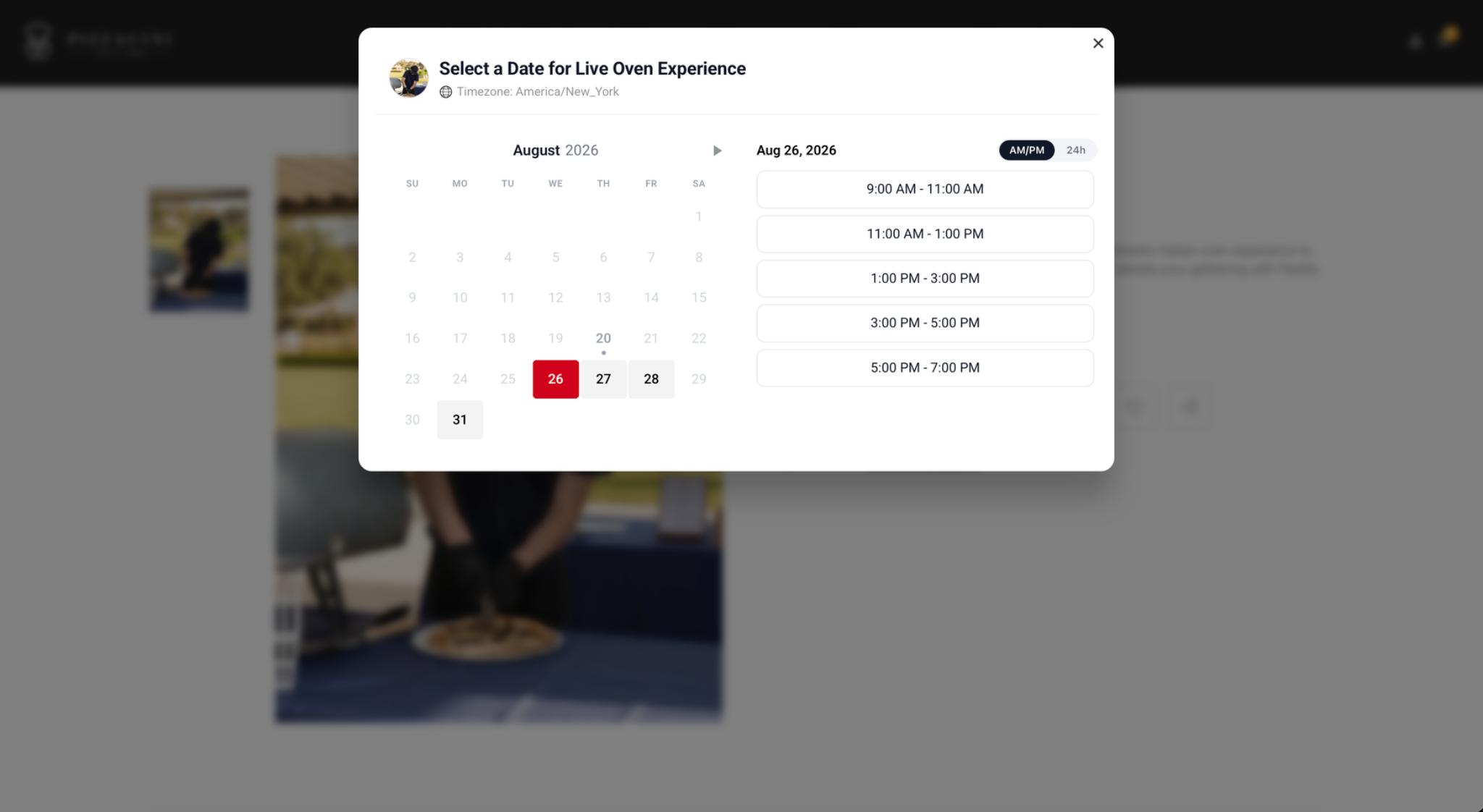
The course page combines emotional storytelling with practical details, date selection, product-style booking, expectations and FAQs. That structure gives the experience enough context to feel valuable—and enough clarity to book with confidence.
Story-led landing page and clear value proposition.
Date-selectable product journey with availability controls.
Operational details, expectations and FAQs before purchase.
Theme and app styling refined into one consistent experience.
The challenge
The experience had to simplify minimum quantities, configurable bundles, a 30+ bulk path, subscriptions, local delivery, limited-state shipping and pickup.
Bookings added advance notice, daily capacity, temporary holds and seat limits. App overlaps, cart refreshes and exception rules required careful testing.
Key design decisions
I separated individual pizzas, bundles, bulk purchasing, subscriptions and experiences into clearer starting points.
Minimum quantities, delivery eligibility, scheduling and terms appeared before checkout, where customers needed them.
I configured Fast Bundle, Discounty, Sesami, Zapiet and Appstle, then aligned their interfaces with the store.
I made targeted front-end adjustments and validated them across cart states, fulfilment rules and screen sizes.
The connected system
Each offer gets the structure it needs while sharing a consistent visual language and clear path to action.
Individual pizzas
4, 8 or 12 pack
30, 45 or 60 days
Classes + oven experience
Cross-functional collaboration
I translated business requirements into customer flows and coordinated decisions around delivery, promotions, capacity and notifications through ongoing testing with the business and app teams.
Outcome
A responsive Shopify storefront with clearer product and offer journeys.
Mix-and-match bundles, subscription products and bulk-order logic.
Local delivery, selected-state shipping and store-pickup paths.
Capacity-aware bookings, delivery scheduling and operational order data.
Custom cart behaviours and interface refinements across the theme and apps.